
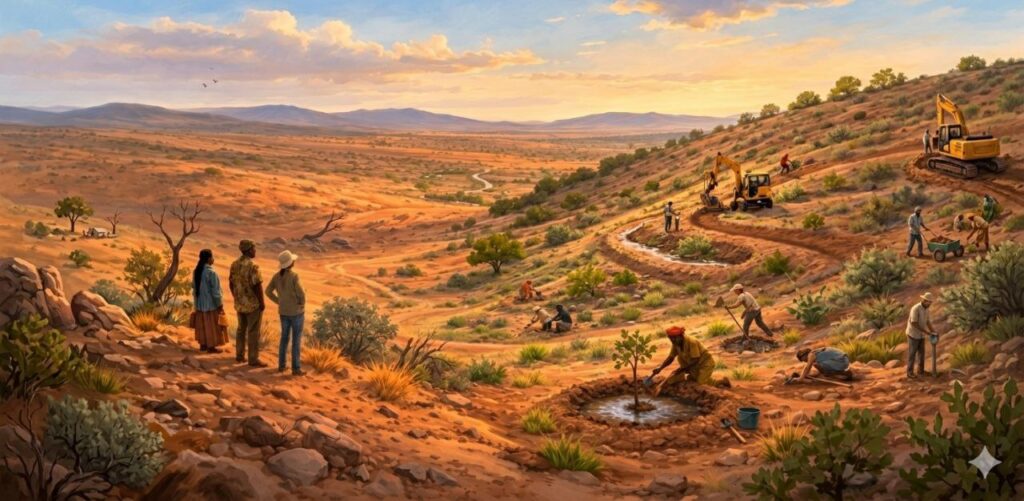
For many years I’ve been interested in ecological restoration, but it’s mostly been a side interest. Recently I decided to take a more active role in learning about ecological restoration and to share my journey through this blog. This article marks the beginning of this new phase in my journey.
LOOKING BACK: MAJOR INFLUENCES
A few experiences stand out to me as formative in how I think about ecological restoration and why it excites me.
Yacouba Sawadogo: an inspiration
One of the most influential experiences in the early days of my interest in ecological restoration was learning about Yacouba Sawadogo. It was about fifteen years ago when I first learned about this man from Burkina Faso who brought life back to his desertified community.
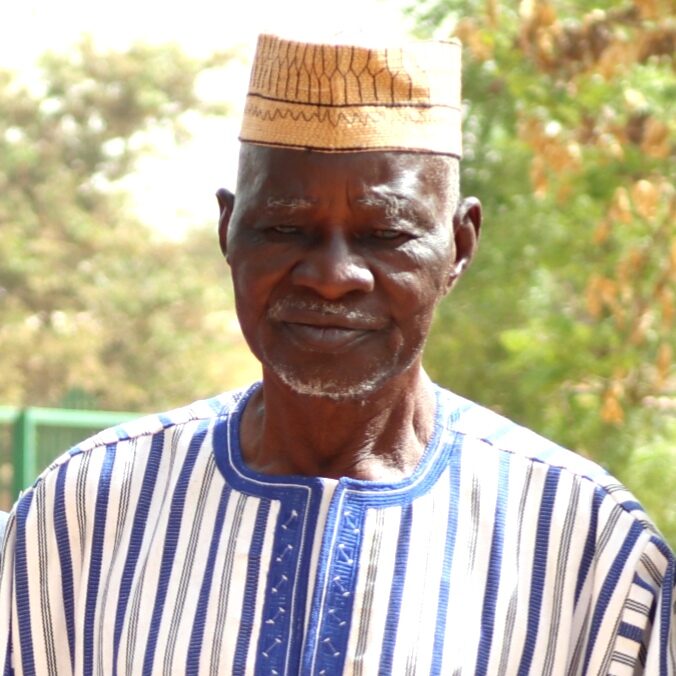
Image credit: EKokou (wikimedia, CC BY-SA 4.0)
As the story goes, Yacouba Sawadogo’s community was suffering extreme drought and crop loss. He began to build short rock walls and dig pits to slow down and collect the precious rainwater. He filled these traditional zaï pits with organic matter, an innovation on his part, to increase soil fertility and attract termites. The termites dug channels, which helped water infiltrate the soil better. This increased fertility and moisture helped the trees he planted in the pits to survive and grow.
When he first started, Yacouba Sawadogo was working alone, and people thought he was crazy. But year by year, the trees grew. Now, over four decades later, a forest stands where there once was desert, a forest that feeds people and attracts animals and rain. And Yacouba Sawadogo is now considered a visionary.
What got me so excited by this man’s story was his determination, his sense of experimentation, and the way he transformed barren soil back to productive, life-sustaining land. I thought to myself how cool it would be to take part in such transformative work, too.
White Mountain Apache: changing my perspective
Around the same time I discovered Yacouba Sawadogo, I was also interested in ethnobotany. This interest led me to explore indigenous knowledge systems more broadly, which is how I discovered a 2003 paper by Jonathan Long, Aregai Tecle, and Benrita Burnette: “Cultural Foundations for Ecological Restoration on the White Mountain Apache Reservation.” This paper describes some ways in which Apache traditions inform riparian restoration.
In revisiting this paper recently, I was reminded of some things that left an impression on me when I first read it:
- Apache understandings of ecosystem health parallel understandings of human health (which was intriguing to me given my own interests in human health).
- Some land is better left alone than actively restored by humans. Respect and listening skills are required by a practitioner to tell the difference.
- Non-traditional tools like bulldozers can have a place in traditional restoration practices. What’s more important than the tools used is the mindset of the practitioners.
This especially stood out to me in contrast to Yacouba Sawadogo, who used hand tools almost exclusively to achieve his remarkable forest restoration. Both approaches can work; there is no one way.
Ben Falk: doubling down on water
A bit more recently (about ten years ago), I watched a talk by Ben Falk, a permaculture practitioner with land in Vermont. Like Yacouba Sawadogo’s story, Ben’s story also had strong themes of water management. But rather than pits, Ben talked about using swales–terrace-like berms of packed dirt that follow the contours of the land–to capture and slow down rainwater on slopes.
He showed some videos taken during a hurricane of the run-off at the bottom-most part of his land, a mere trickle of clear water compared to the brown torrent of water flowing off nearby land. The swales were not only capturing water but also preventing soil loss, fundamentally improving the resilience and productivity of the land for many years to come.
An interesting parallel to the use of bulldozers in the Apache restoration paper was Ben’s discussion of why he uses heavy equipment to build the swales. He framed it as a timely investment to build structures that will likely continue to benefit the productivity and water harvesting capacity of the land for many centuries to come. While the swales could be built with much manual labor, he argues that using fossil fuel-powered heavy equipment for one-time establishment of permanent systems is an intelligent use of these non-renewable resources while we still have them.
Organic farming: getting my hands dirty
In addition to the aforementioned experiences that influenced how I think about ecological restoration, I have also had many hands-on experiences, which get me excited about hands-on restoration work. Some of the most formative experiences happened not long after I had graduated from college, living and working on small, organic farms in Hawai’i and southern California.
One of my most common tasks on these farms was hand-weeding. A lot of hand-weeding. I can remember several occasions being out in the fields by myself, kneeling in the dirt and thinking to myself how great of a classroom this was for learning about biology. I could observe the variety of animals living in the soil, including a small snake in its den that I uncovered by accident one time. I could learn about the way different soil types look, feel, and smell, and what types of plants grow in them. And by examining the root structures of the various plants as I pulled them out of the ground, I could understand why some were relatively easy to dislodge while others were so stubborn.
Weeding (along with planting and harvesting) was the norm for me, but I would occasionally come up with special projects for myself. And there is one project that stands out in my mind because of how fun and educational it was. It was during a downpour in Ojai, California. Some of our freshly planted beds were being flooded, dislodging the new transplants. I took it upon myself to go out there with some digging tools and see if I could salvage our work.
And what fun it was. Observing how the water was making its way across and down the field. Digging channels and watching how that changed the flow. Connecting one channel to another. I felt like a kid playing in the rain. By the end of it, I was cold and tired. I was also glowing with joy and the satisfaction of having not only saved some of our crops but also learned a thing or two about hydrology.
I’ve since continued to garden, even writing about some of my experiences and experiments in this blog. These hands-on experiences of working with the land and seeing the results of my work have deeply influenced why I’m drawn to restoration work.
LOOKING AHEAD
Now that I’ve shared some of my early influences in ecological restoration, I turn my attention towards where I’m headed.
There are certain aspects and flavors of ecological restoration that I’m particularly drawn to. For one, I enjoy working outdoors, seeing tangible results of my efforts in real time, and seeing the benefits of these results to myself and my community. Another aspect is working with indigenous communities and indigenous knowledge, an area in which I’m still very much a beginner and eager to learn. To me, it just makes sense to work with people who have developed working understandings of their lands over many generations.
I do feel a sense of urgency because of environmental and climatic changes. While I think that large-scale mitigation efforts are important, I recognize that the changes are already happening and will likely continue to happen at an accelerated pace. For this reason, I want to put my efforts into climate adaptation and resilience. And I’m especially drawn to work at the community-level, which is where I can see my efforts being fruitful.
In starting this phase of learning, I am not starting from zero. I have a background in environmental sciences such as forest ecology, microbial ecology, and most recently forest inventory. And with this background come skills in field sampling methods, botany, and experimental design as well as data collection, management, and analysis. I believe these skills and experiences provide a decent foundation from which to deepen my knowledge of ecological restoration.
CLOSING THOUGHTS
So that about wraps up this first article in the series. I’m excited to dive deeper into ecological restoration, climate adaptation, indigenous knowledge, and related topics and to share my process in this blog. Maybe the information will help or inspire someone. And even if no one else benefits from it, still I find that writing helps identify gaps in my own knowledge and clarify my own understanding.
I already have a few other articles in mind on topics such as indigenous knowledge and botanical resources, so stay tuned!
RESPONSIBILITY RUBRIC

This rubric shows human vs AI contribution across project stages.

━━━━━━━━━━━━━━━━━━━━

CONCEPT/PLANNING
Human 70% | AI 30%
[==============......]
AI: Claude

RESEARCH/VERIFICATION
Human 40% | AI 60%
[========............]
AI: Claude

WRITING
Human 85% | AI 15%
[=================...]
AI: Claude

EDITING/REFINEMENT
Human 50% | AI 50%
[==========..........]
AI: Claude

IMAGE CREATION
Human 50% | AI 50%
[==========..........]
AI: ChatGPT, Gemini

━━━━━━━━━━━━━━━━━━━━

AI Tools: Claude Sonnet 4.5, ChatGPT 5.2, Gemini 3 + Nano Banana 2