
I’ve had a long-standing interest in street dogs. The places I’ve lived in the US don’t have many street dogs, so most of my experiences with them are from my travels abroad (e.g., Turkey and Thailand).
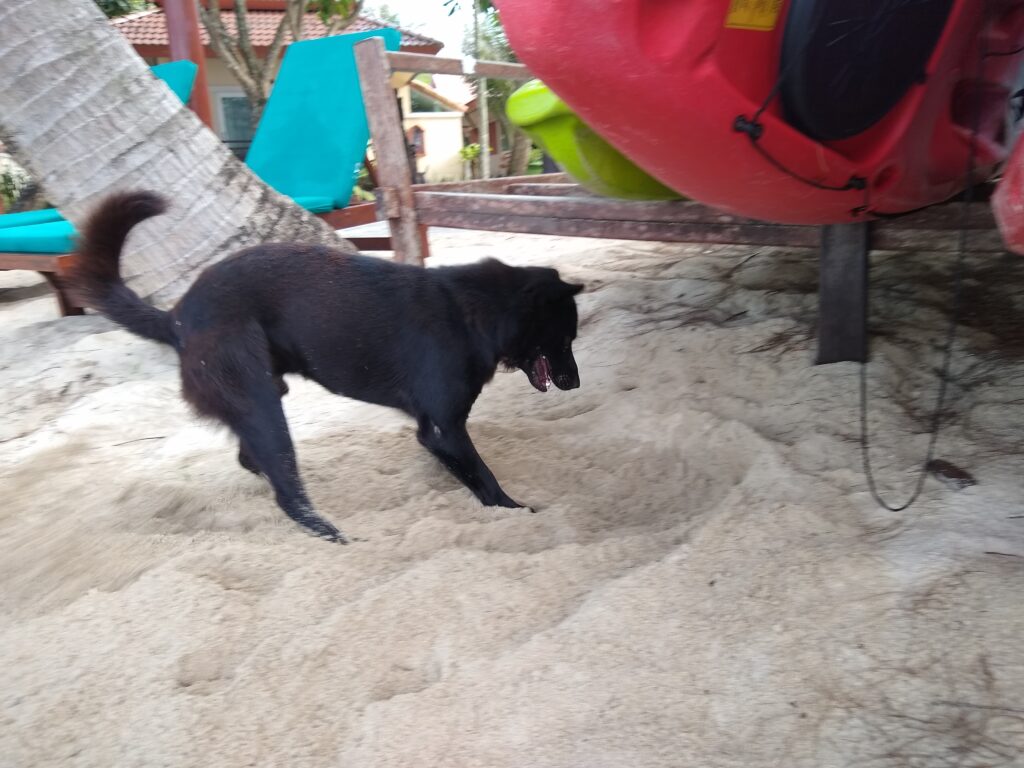
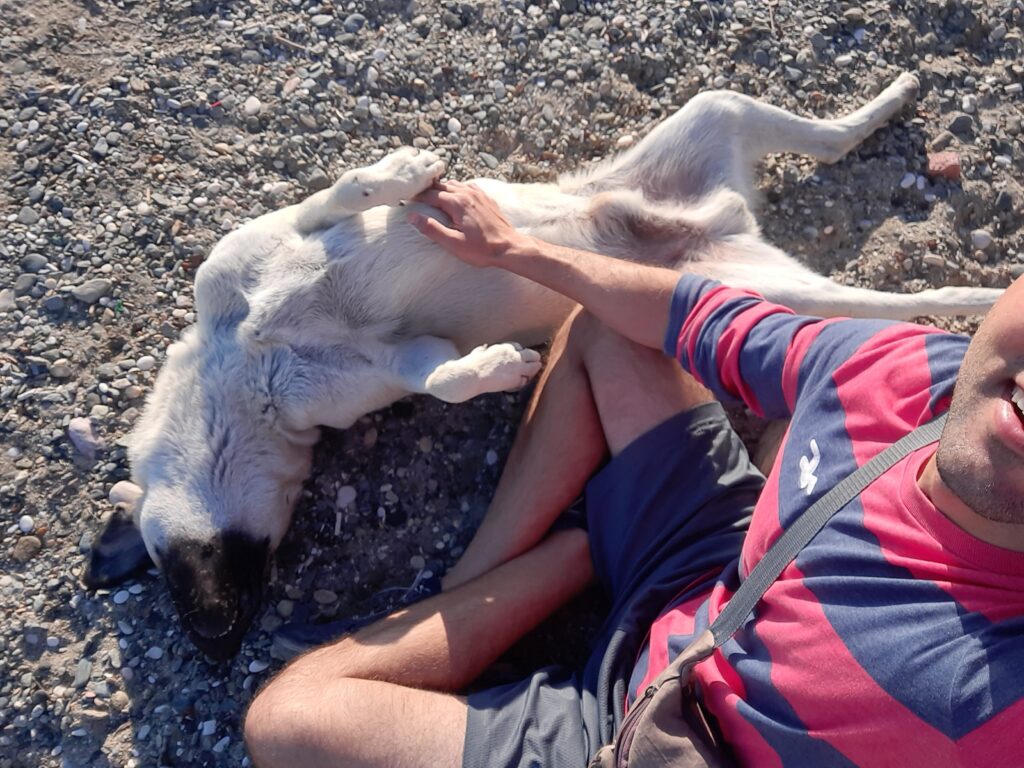
On a recent trip to the Federated States of Micronesia (FSM), I had the opportunity to observe and interact with street dogs again. I want to share some observations from this trip, along with some questions and hypotheses that these observations have generated; some of these hypotheses deal with ecological factors, like population density. Then I’ll share a bit about how my interest in street dogs evolved. I’ll end the article with a few tidbits about street dogs in the context of ecology and conservation.
And of course, there will be more cute dog pics!
Observation: health differences by place
For the first part of my trip to FSM, I was on the island of Pohnpei. I stayed in the town of Kolonia, the largest population center on the island.
In Kolonia, the street dogs didn’t look so healthy: mangy and lethargic. By contrast, driving around the surrounding rural areas, the dogs looked healthier: fuller coats and more energetic.
I began to wonder why the country dogs seemed healthier than the ones in town. Here are some possible factors I’ve come up with in reflecting on this:
- Population density. The density of dogs was noticeably higher in town than out in the country. Higher population densities could be more conducive to spreading disease, which could explain why the urban dogs seemed more sickly than the rural dogs.
- Food quality. Maybe the dogs in town are eating more processed human foods compared to the rural dogs, and perhaps the urban dogs are less healthy as a result.
- Access to natural habitat. Maybe the access to more forested, less built-up environments creates less stress for the rural dogs, compared to the dogs in town.
- Cultural differences. Maybe there are differences in how people treat dogs in town vs. out in the country that could explain why the country dogs look healthier. E.g., maybe people in the country feed the dogs better than people in town. This is the most speculative hypothesis in the list; I don’t have any good observations or relevant background knowledge to support it.
- Observer error. There is the ever-present possibility that my observations do not reflect the true situation. For example, maybe the urban dogs looked sicker because I was able to see them up close and for a longer duration, whereas I mostly observed the rural dogs from a distance while driving by. Or maybe the sampling of dogs I observed in each environment (urban and rural) was not an accurate representation of the true populations in these areas.
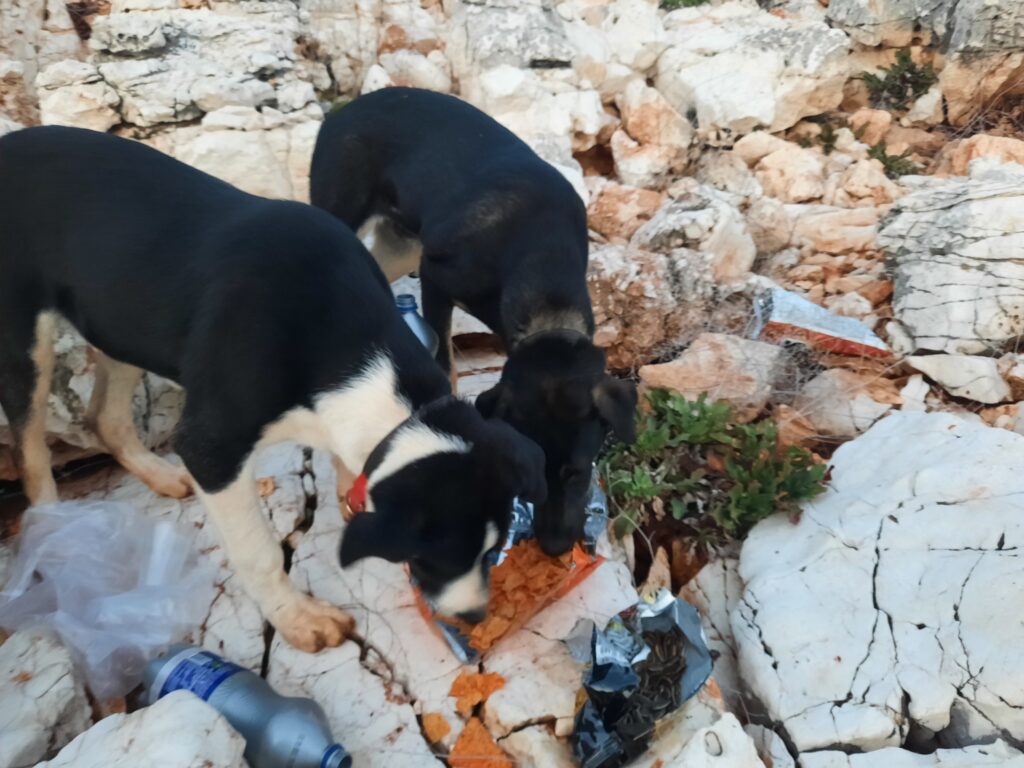
At least one study found the opposite pattern. In 2019, Tiwari and colleagues reported that free-roaming dogs in an urban setting were generally observed to be healthier than those in a rural setting. They hypothesized–but did not test–that this difference could be related to food availability: dogs in the urban setting were more likely to be observed closer to garbage points, and a higher proportion of urban residents compared to rural residents were feeding stray dogs.
However, a few aspects of the Tiwari et al. study work against its ability to generalize the findings. First, their study included only one city (urban) and one village (rural). Second, their urban and rural observations took place at different times of year, so seasonality could be confounding their results.
But still, their point about people feeding street dogs is interesting to me. They reported that 72% of people fed street dogs in the urban location vs. 39% in the rural location and explained that this feeding was done for religious or compassionate reasons. I did not observe any people in Kolonia town actively feeding the street dogs, although this doesn’t necessarily mean that no one feeds street dogs there. I didn’t have a chance to observe human-dog interactions in the country, since I was only driving by.
The thing that drew my attention to the health of the street dogs in Pohnpei in the first place was the contrast between their appearance and that of street dogs I’ve seen in Turkey, which has a strong culture of feeding and caring for street animals. One municipality I visited in Turkey even had paid vending machines where people could dispense food for street cats and dogs. I’d be curious to talk to some people in Pohnpei about cultural views surrounding street dogs there.
Observation: behavioral differences by place
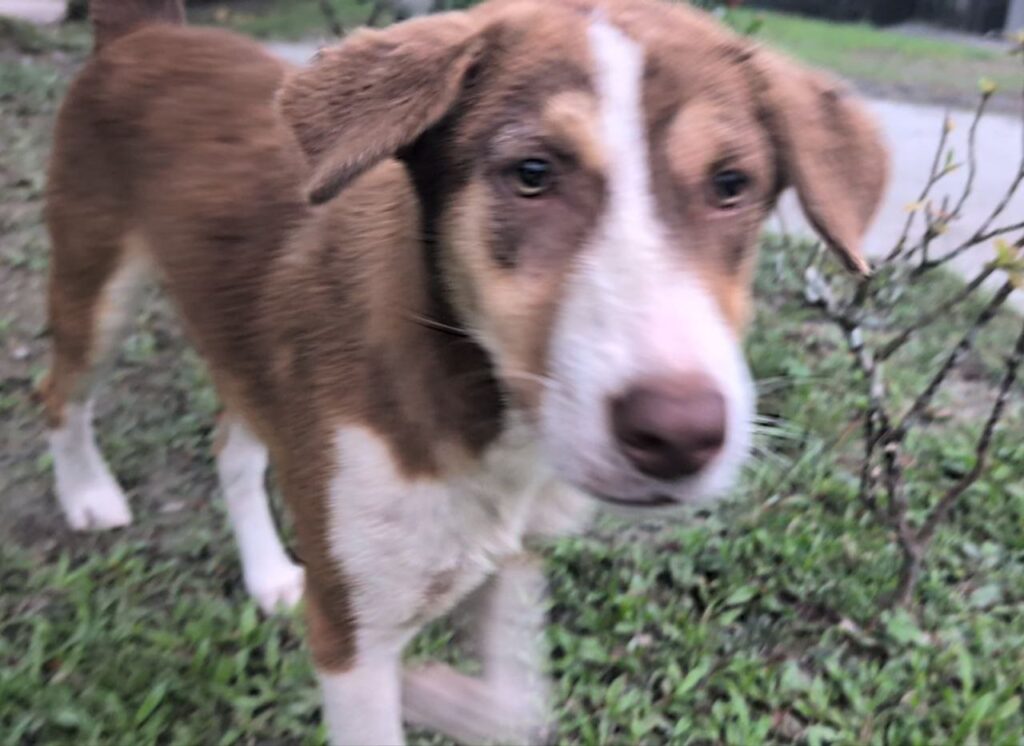
After spending a week in Pohnpei, I had the opportunity to spend a few days in Yap (another state in FSM) in a town called Colonia (with a “C”, different from Pohnpei’s Kolonia with a “K”). There were a lot of street dogs in the area of town I was staying in, so I had many opportunities to interact with them.
I noticed that quite a few–but not all–of them were timid and fearful of me. This was surprising: the street dogs I’ve encountered in Turkey are generally more confident around me (whether friendly, aggressive, or simply neutral).
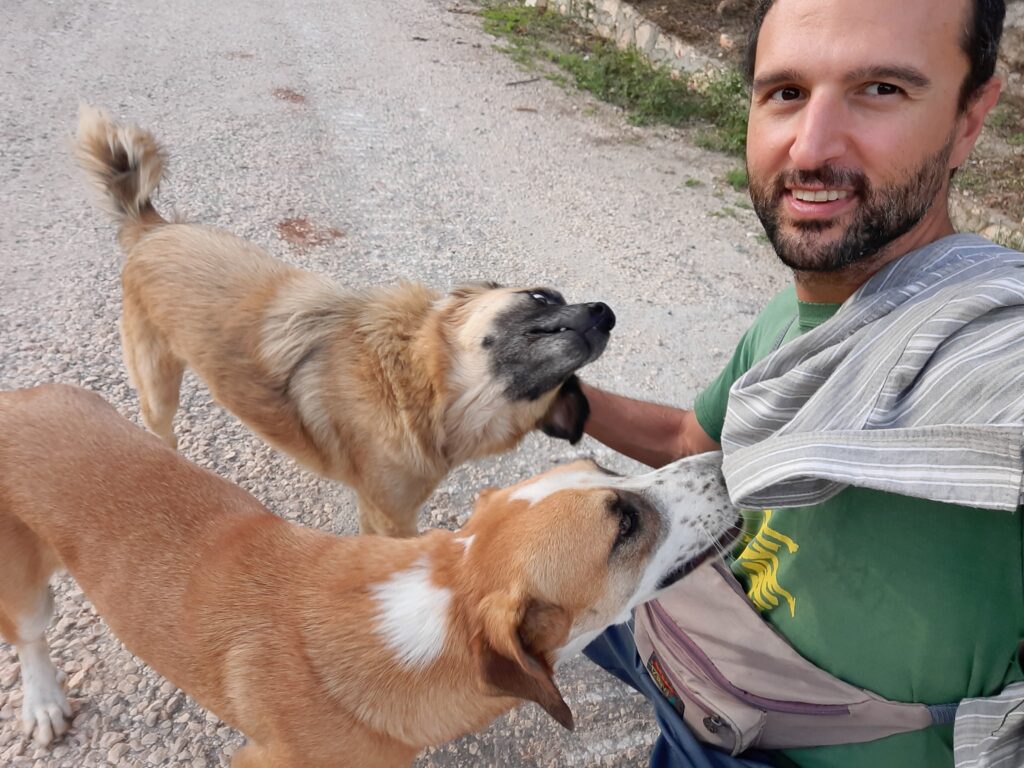
I began to wonder why this was. A few thoughts:
- Frequency of human contact. A 2019 preprint from Bhattacharjee and colleagues suggests that free-ranging dogs who have little interaction with humans are shyer toward unfamiliar humans than those who have more.
- Colonia is more sparsely populated with humans than the places I’ve visited in Turkey, which could contribute to differences in frequency of human contact.
- Similar to Pohnpei, I did not observe anyone in Colonia feeding stray dogs, which is another form of human-dog interaction. In fact, I don’t remember seeing any specialized pet food in stores, only old human food that was marketed for pets. In Turkey, I usually buy some dog treats to carry around with me. I didn’t find dog treats in any stores I visited in Pohnpei or Yap.
- Size. The street dogs I observed in Colonia were generally smaller than those I have seen in Turkey. Perhaps the smaller size of the Colonia dogs relative to me could help explain why they were more fearful toward me. (As an interesting aside, it struck me how uniform in size the Colonia dogs were–with the large majority of adults in the 30-40 lb range–compared to dogs I’ve seen in Turkey).
- Observer error/bias. The comparison is admittedly lopsided. I’ve spent a lot more time with street dogs in Turkey than I have in Yap. And I wasn’t carrying dog treats with me in Yap.
My hunch is that frequency of human contact is the main contributing factor. And again, this makes me curious to ask people in Yap about how they relate to street dogs.
The evolution of my interest in street dogs
As a kid, I was scared of dogs. Then at some point, I decided I didn’t want to be scared anymore. I figured that learning about dogs would be a good way to overcome this fear. I think my interest in street dogs was born out of this desire to be less afraid of things in the world around me. Visiting Turkey over the years has given me plenty of opportunities to learn about dogs. Interacting with the street dogs there helped transform my view of dogs from scary things to interesting and even friendly things.
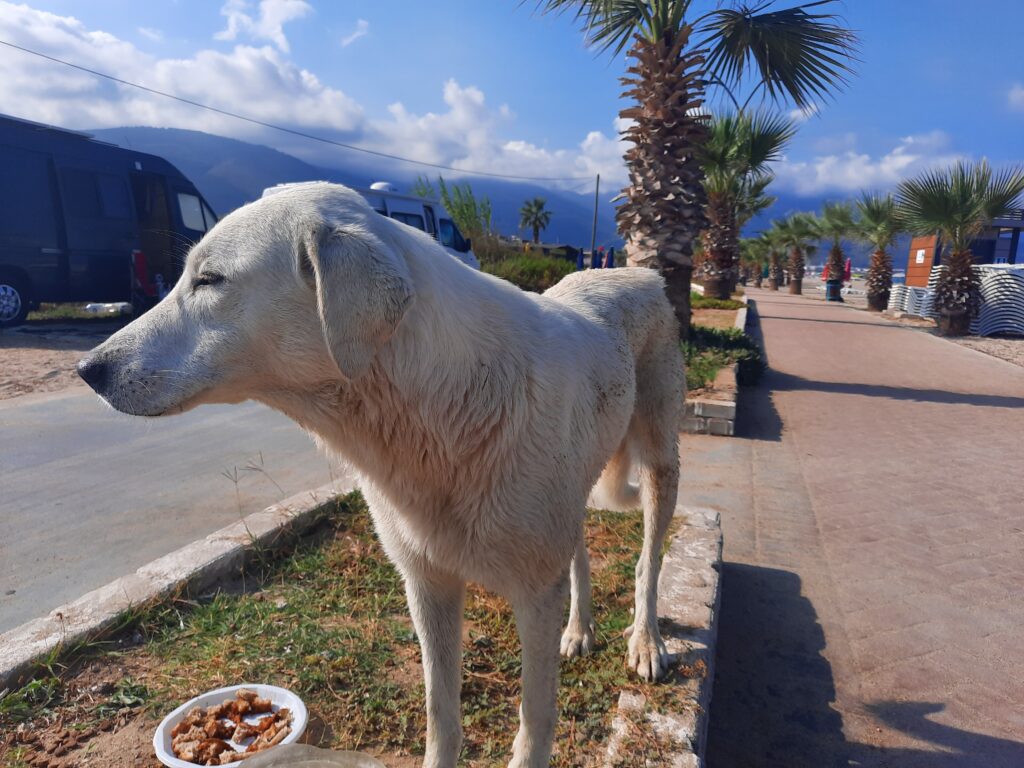
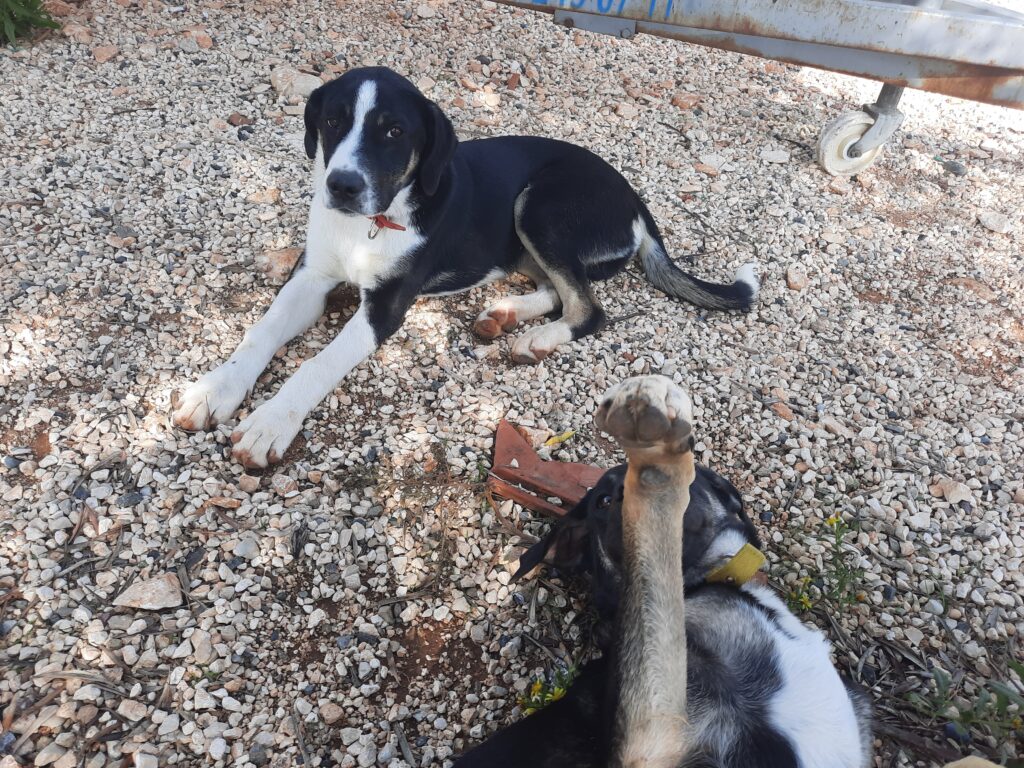
One of my trips to Turkey took place in the summer of 2013, just prior to starting a plant science PhD program. At the time, I was very interested in ethnobotany–the study of how humans use and relate to plants–and I was thinking about potential research questions to study in grad school. There was a small pack of street dogs in the town of Güzelçamlı where I was staying at the time. I started hanging out with them and following them around. I began to wonder about their plant knowledge, if they sought out specific plants for specific reasons. Could I do a study of how dogs use and relate to plants? I mean, how cool would it be to hang out with a bunch of dogs for my PhD project! And if I did such a project, what area of science would it fall under?
Well, I didn’t get very far with this research topic, eventually studying the chemistry of hops instead. But I still wonder about the area of study. It wouldn’t be ethnobotany, since that deals with human-plant interactions. It could probably fit under zoopharmacognosy, how non-human animals self-medicate with plants and other substances (e.g., fungi, soil), especially since I was already interested in medical ethnobotany.
But what about something more dog-specific? The root “ethno-” relates to human culture. So what about cynobotany (“cyno-” meaning “of or pertaining to dogs”)? Or how about cynopharmacognosy? As far as I can tell, neither of these terms are in use.
Ecology and conservation
It may seem unusual to think about street dogs from an ecological or even conservation lens. But believe it or not, people actually study this!
- The most notable example I know about is the 1973 book by Alan Beck, The Ecology of Stray Dogs: A Study of Free-Ranging Urban Animals (available as a free PDF).
- According to a 2017 peer-reviewed paper, dogs (stray and otherwise) have contributed to the extinction of at least 11 vertebrate species and threaten many more.
- As apex predators, feral dogs may compete with and displace other apex predators, according to this 2016 article in National Geographic.
- A peer-reviewed study from 2008 explains how a decline in vulture populations in India likely contributed to an increase in dog populations, because the livestock carcasses that would normally be eaten by the vultures were instead eaten by dogs.
Closing thoughts
In writing this article, I’ve gained an even deeper appreciation for street dogs and the roles they play–for better or for worse–in our ecosystems and our societies. I hope this article has inspired you to take a closer look at the world around you, too.
Bye for now!
AI RESPONSIBILITY RUBRIC
This rubric shows human vs AI contribution across stages of developing the article. The rubric was generated by AI and reviewed by Taylan, making adjustments as needed.
--------------------
CONCEPT/PLANNING
Human 65% | AI 35%
[=============.......]
The topic, observations, personal elements, and takeaway originated with the author. AI helped shape the outline, section structure, and ways to connect the piece to the blog's theme, and the author made the final decisions.
--------------------
RESEARCH/VERIFICATION
Human 60% | AI 40%
[============........]
The author supplied several of the cited ideas and sources from prior knowledge. AI did some literature searching, source retrieval, and fact-checking, and flagged claims that needed softening or sourcing.
--------------------
WRITING
Human 90% | AI 10%
[==================..]
The author wrote the full draft independently. AI contributed occasional suggested wording that the author chose to adopt or adapt.
--------------------
IMAGES
Human 100% | AI 0%
[====================]
All photos were taken and selected by the author.
--------------------
EDITING/REFINEMENT
Human 25% | AI 75%
[=====...............]
The author did a round of sentence-level editing before sharing the first draft. AI then led logic-checking, fact-checking, and proofreading passes, and the author reviewed and implemented most of the suggested changes.
--------------------

AI Tools: Claude Sonnet 5.5